AlbTech helps founders turn startup ideas into working products they can demo, test, sell, and grow. Ship a market ready MVP in 30 days, or scale a full product, with a founder led team that knows what it means to ship.
NDA standardEU GDPR compliant50% on signing, 50% on handover
Built by the team behind Kantio, BistroTools, Kupona, and 50+ shipped products.
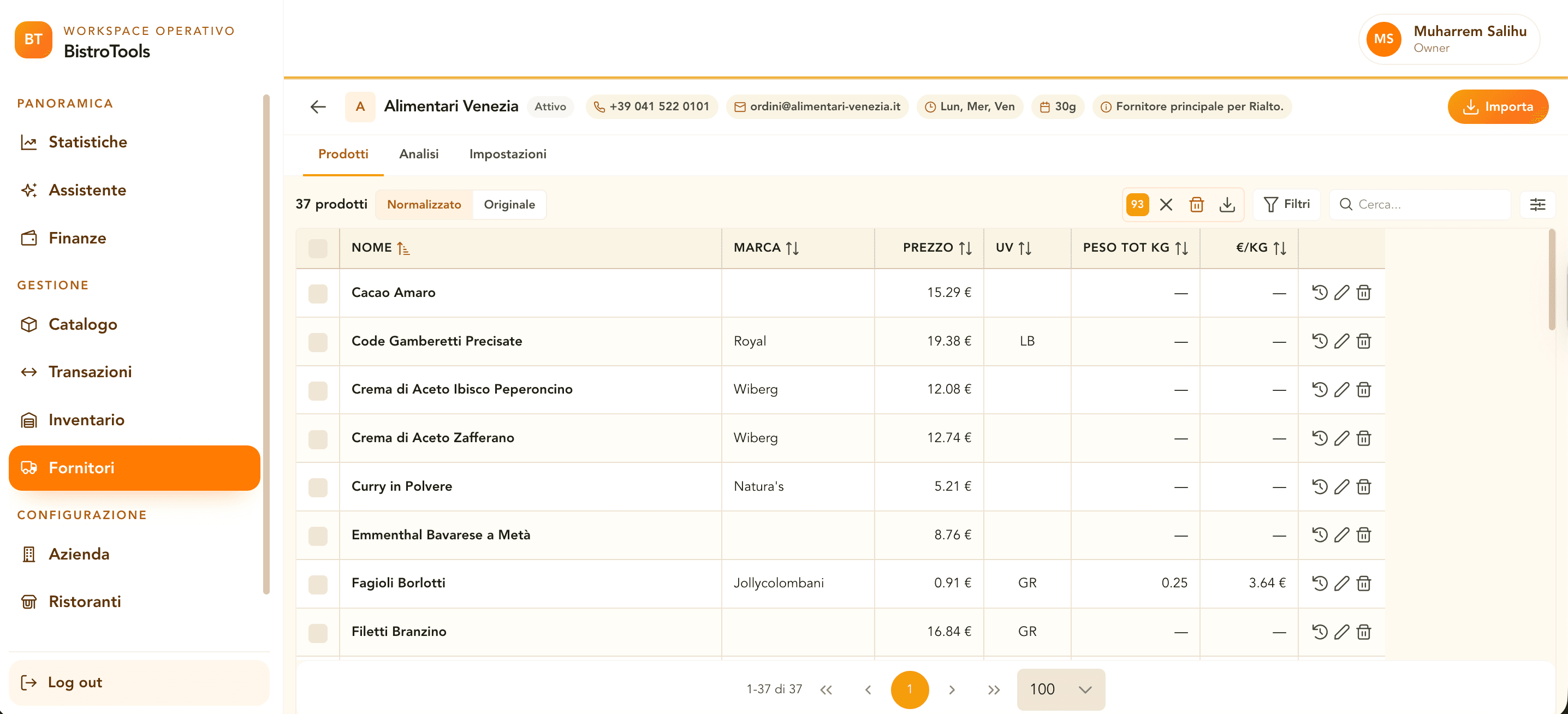
www.bistrotools.com
Live
BistroTools
Operations Workspace · Built by AlbTech
Shipped
MVP in 30 days
Code + IP yours
AI Integration
Guaranteed delivery
Products we built and run ourselves
Free MVP Scope Builder
Get the scope Ledian would write for your idea
Describe what you want to build. In about a minute you get the riskiest assumption, the 5 features to build, what to cut, the stack and the 30 day plan. Free, nothing to sign up for.
The Real MVP Trap
Three ways founders waste their first year
Bad MVP decisions don't just cost money. They kill momentum, confidence, investor interest, and the chance to learn from real users.
01
They wait 12 months to launch
The idea stays trapped in meetings, scopes, revisions and almost ready versions. By the time users touch it, the market has already moved.
Momentum lost
02
They burn 100,000 euro before proof
A senior developer or agency can drain your budget before you even know if the product should exist. Big builds feel safe, but they often hide weak validation.
Budget burned
03
They build on tools that break later
No code is fine for landing pages and simple tests. But when users, payments, roles, data, integrations and scale arrive, the rebuild becomes unavoidable.
Rebuild required
AlbTech exists to break this pattern. 30 day builds, flat prices, code and IP yours from Day 1.
From idea to live product
Six steps. You always know what happens next.
The same drill on every build, so you know where your product stands on any given day.
01/Day 0
NDA
Before you share the details, we both sign a mutual NDA. It is done the same day you ask, so your idea is protected from the first real conversation.
You get. A signed mutual NDA
Who. Ledian, personally
02/Days 1 to 2
Scope
Two working sessions. We find the riskiest assumption in your idea and the five features that test it. We also define your first user and the data model, and write down what stays out.
You get. A written scope and architecture document that locks the price and the launch date
Who. Ledian and the tech lead
03/Days 3 to 7
Prototype
A clickable prototype of the core flow goes in front of real users before production code depends on it. Changing a screen now costs an hour. Changing it after the build costs a week.
You get. A clickable prototype you can show to users and investors
Who. Our head of UI and UX, reviewed with you
04/Days 8 to 25
Build
One week sprints. Every Friday you get a working preview link, and every Monday we review it together in 30 minutes. You have access to the code repository from day one and see every commit.
You get. A working product you can click through every week
Who. Senior engineers, the same people from start to finish
05/Days 26 to 30
Launch
We polish the product and run a security review before the production deploy on your own accounts. Analytics and error monitoring are live before your first user signs up. We record a handover session that walks you through every system.
You get. Your MVP live on your domain, with the code and every account in your name
Who. The whole team, with Ledian signing off
06/After day 30
After the MVP
Thirty days of support are included. We read the launch data with you and decide the next move together. You can grow the product with us in Build and Scale or take it fully in house. If you are raising, we prepare an investor demo and a technical due diligence pack.
You get. A clear next step, backed by real usage data
Who. Ledian, on a call with you
MVP in 30 Days is a fixed €7,500 per project. Bigger products are scoped with you on a call. We take equity only rarely, and we never raise it on a first call.
I sign your NDA, I run both scope sessions and I review every Friday preview. If something is going to slip, you hear it from me first.
Ledian Shera
Who builds it
Ledian Shera scopes and leads every build.
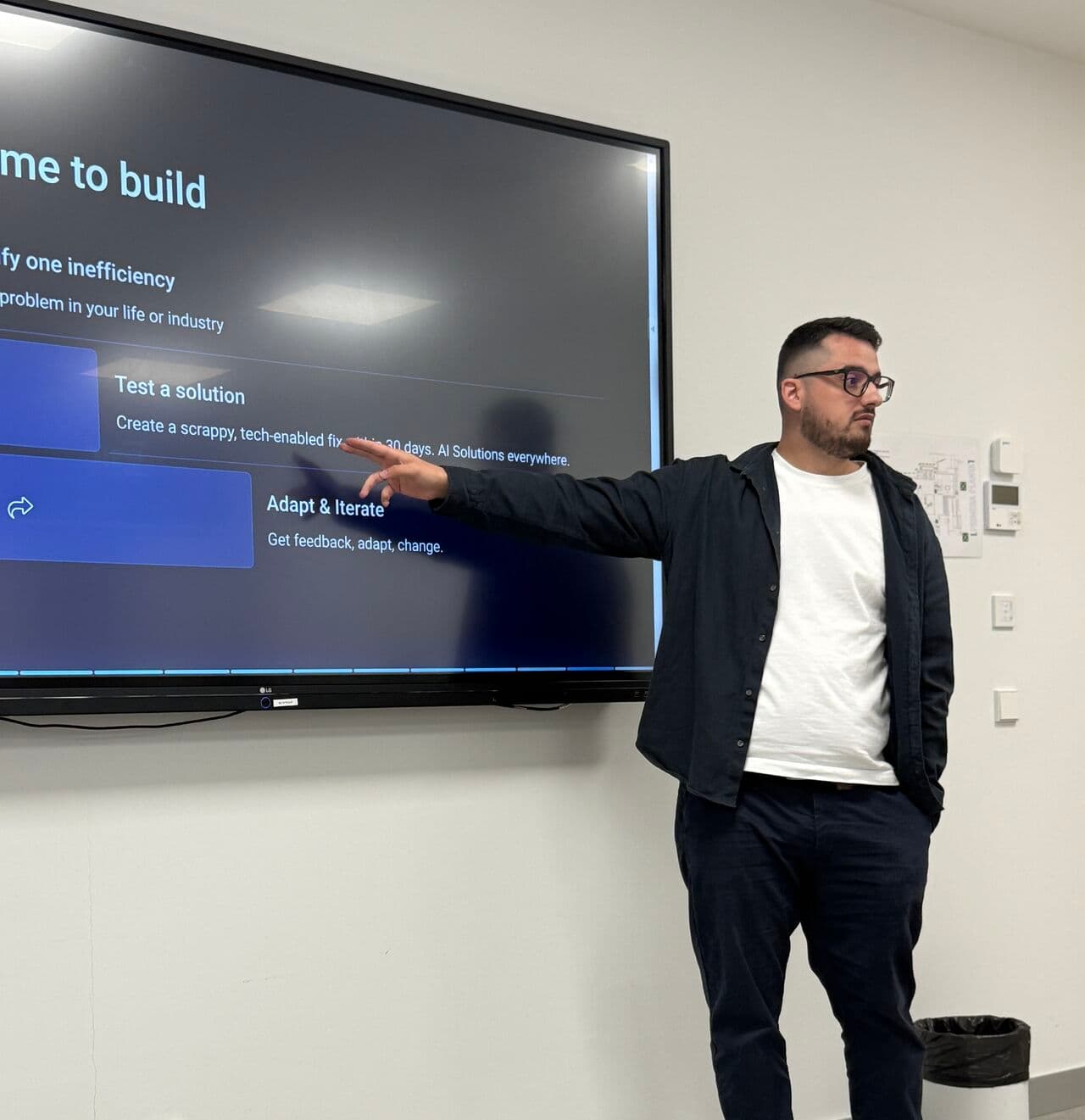
Ledian shipped his first startup at 15 and has been building products ever since. Over the last ten years he has shipped more than 50 MVPs for founders and companies across Europe and the United States.
His work ranges from humanitarian software used by a UN agency and deployed in Ukraine to AI work for a major international airport.
AlbTech has launched three products of its own: Kantio, BistroTools and Kupona. We have lived through the payroll, the deadlines and the first paying customer you are about to go through.
10+
Years building products
50+
MVPs shipped
200+
Businesses served
3
Products of our own
On every build, Ledian personally
Signs the mutual NDA on day 0
Runs both scope sessions and locks the price and the date
Reviews the working preview every Friday
Signs off the launch before it goes live
Around him, a senior core team shared across every build
CTO
Lead AI Engineer
Head of UI and UX
Lead of Data
Automations Lead
Head of International Expansion, DACH
Behind them are 50+ close collaborators we bring in by role, only when your build needs them.
It works
The same process, on real founders' products.
90 days
Under NDA · preview blurred
360 hours design
Full IP transferred
Project Management SaaS
USA
A 20 year US project manager with the highest standard. Complete UI/UX system and interactive Figma prototype across all MVP modules, full design IP transferred, Angular ready.
FigmaDesign SystemAngular-ready
60 days
1,000+ SKUs
AI served catalog
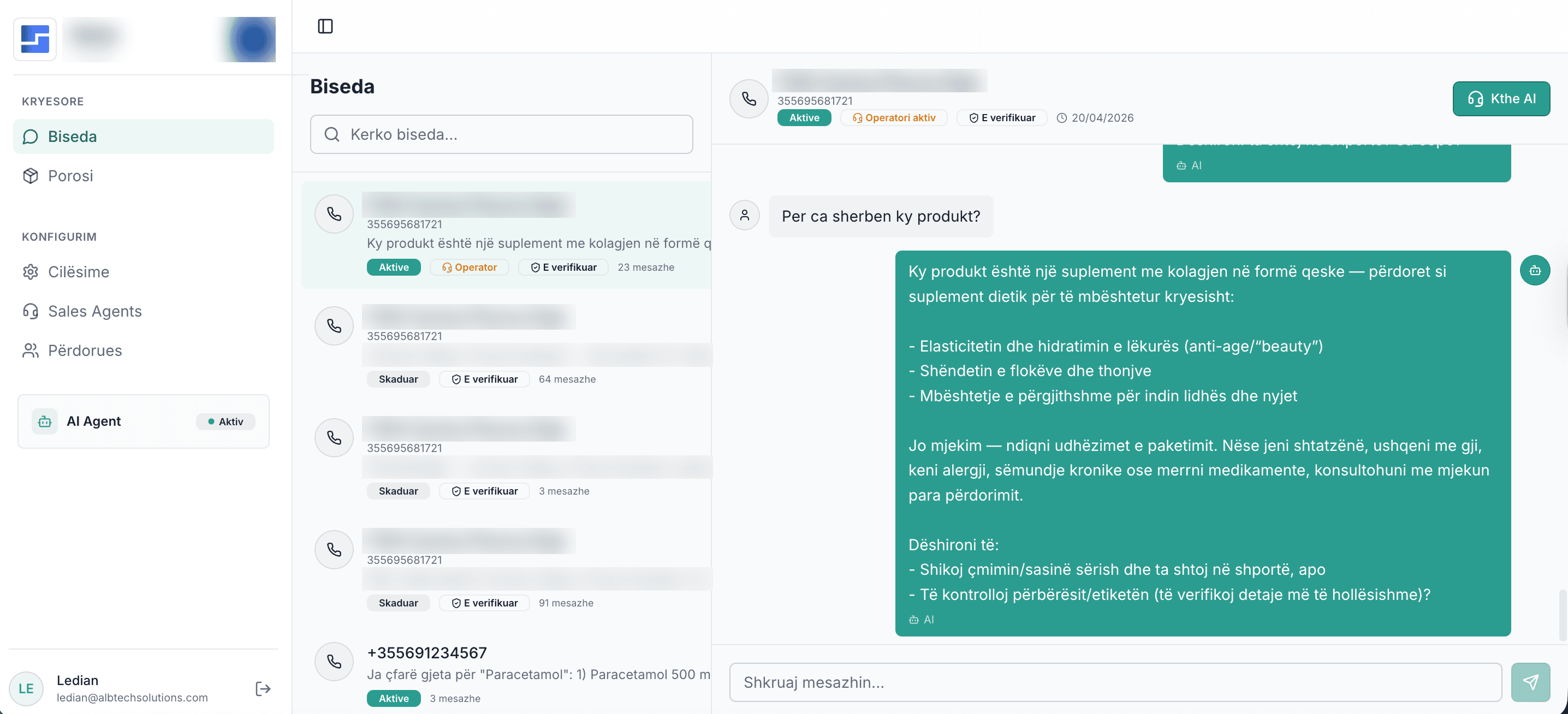
AI Customer Assistant
Albania
WhatsApp and web AI assistant for a pharmaceutical distributor. Handles inventory queries, order routing, and product recommendations across 1,000+ SKUs in Albanian and English.
Next.jsOpenAIWhatsApp API
Founder voice
“
You guys have been amazing and brought to life the idea that I had for 10 years.
HHawkFounder, US project management SaaS
Pricing
Two ways to build with us. Pay flat, ship fast.
Founders validating an idea start with the 30 day MVP. Funded teams and companies scope a full build with us.
For founders
MVP in 30 Days
A market ready MVP in 30 days, built to validate your idea with real users. Designed and engineered end to end by a senior product team.
MVP, prototype and proof of concept answer three different questions.
A minimum viable product is the smallest version of your product that a real customer can use on their own to get the result you promise. It exists to answer one question. Will people use this, and will they pay for it?
The word that matters is viable. An MVP is small, but it works. A stranger signs up, does the job and gets the result without you on a call next to them.
MVP, prototype and proof of concept compared
Proof of concept
Prototype
MVP
The question it answers
Can this be built at all?
Do people understand it?
Will people use it and pay?
Who sees it
Your team
Test users and investors
Real customers
How it is built
Throwaway code
Design tools or quick code
Production code
What you decide next
Whether it is feasible
What to build
Whether to scale
A quick test
If a stranger cannot use it without you explaining it, you have a prototype. That is a fine place to be, as long as you know it.
Chapter 02
Validate before you build
Find the one belief that would kill the business, then test it cheaply.
Every idea rests on a few beliefs. One of them, if it turns out to be wrong, kills the business. That is your riskiest assumption, and your MVP exists to test it.
How to find it
1
Write down every belief
Who has the problem, how often it happens, what they use today and what they would pay to fix it.
2
Ask one question of each
If this is false, does the business still work? The belief where the answer is no is your riskiest assumption.
3
Test it before you write code
Pick the cheapest test that could prove it wrong, and run it this week.
Cheap tests that work before any code
Ten conversations with people who have the problem. Ask about the last time it happened, never whether they like your idea.
A landing page with a clear offer and a waitlist. An email is a weak signal. A preorder is a strong one.
A concierge version. Deliver the result by hand for five customers before you automate any of it.
A clickable prototype in front of real users. Watch where they hesitate and say nothing.
Our rule
If ten people with the problem will not give you thirty minutes, they will not give you money. Fix that first.
Chapter 03
Scope it to five features
How to choose the five, what to cut, and a worked example.
Most first versions fail because they try to do everything. Five features are enough to deliver one complete result to one type of user. Five is also what a senior team can build properly in 30 days.
How to choose the five
1
Write the result in one sentence
For example: a clinic owner sees tomorrow’s likely no shows before they happen.
2
Map the path to it
List every step your user takes, from sign up to the moment they get that result.
3
Keep only what the result needs
A step without which the result cannot happen is a feature. Everything else is a later idea.
4
Park the rest with a date
Write the later ideas down and agree when you will look at them again. It makes cutting much easier.
What to cut first
An admin dashboard. Work in the database or a simple internal tool for the first months.
Several user roles and permissions. Start with one role.
Native mobile apps. A responsive web app reaches the same people sooner.
Chat, notifications and social features, unless they are the product.
Settings, themes and preferences.
Payments, unless paying is part of what you are testing.
Worked example: a marketplace for home cleaners
The idea
Homeowners book vetted cleaners in their city.
Riskiest assumption
Homeowners will book a stranger through an app if the cleaner is vetted and reviewed.
The five features
Cleaner profiles with vetting and reviews
Search by area and date
Booking request and confirmation
Payment held until the job is done
A review after every job
Cut for now
A cleaner mobile app
In app chat
Subscriptions
A referral program
Admin analytics
In the first month the cleaner side runs on email and one simple form. That is enough to learn whether homeowners book, which is the only thing that matters yet.
Vibe coding, a freelancer, an agency or an in house hire.
There are four common ways to build an MVP, and each one is the right answer for someone. Pick by what you need to learn and by when.
Four ways to build an MVP
Vibe coding tools
A freelancer
An agency or studio
An in house hire
Best when
You want to test a simple idea within days
The scope is small and clear and you can manage the work
You need product, design and engineering on a fixed date
You have funding and a long roadmap
Speed to a first version
Fastest
Depends on one person
Fast when the scope is fixed
Slowest, because hiring comes first
Main risk
Stalls on login, payments, real data and scale
One person is a single point of failure
Hourly billing and a quote that keeps growing
Months of recruiting before the first commit
Who runs the project
You
You
The team, with you
You
How you pay
A monthly subscription
Hourly or per project
Hourly or a fixed price
Salaries, often with equity
Vibe coding tools are excellent for a first test. We use them for early prototypes ourselves. Founders often come to us with a product that got most of the way there and stalled on the hard part. That hard part is authentication, payments, real data, security and keeping it running. It is where an experienced team earns its fee.
Whoever you pick, ask for a written scope, a fixed price and code on your own accounts from the first day.
Chapter 05
What an MVP costs, and why
Scope drives the price far more than the hourly rate does.
The cost of an MVP is driven by scope, not by the hourly rate. Five clear features built by a senior team cost less than twenty vague ones built slowly by a cheaper one.
What pushes the cost up
Integrations with other systems, especially older ones without a clean API.
Two sided products such as marketplaces, where both sides need their own flows.
Regulated data, like health or financial records, which needs extra security work.
Native mobile apps on top of the web app.
Unclear scope. The most expensive line in any quote is the one that changes every week.
Our price
MVP in 30 Days is €7,500 per project, fixed. That covers up to 5 core features, product design, 30 days of support after launch and full ownership of the code. You pay half on signing and half on handover. Products that need more, such as native apps or complex integrations, go into Build and Scale, which we scope with you on a call.
Three questions to ask any builder
What exactly is in scope, in writing?
What happens when something outside the scope comes up?
Whose accounts will the code, the data and the domain live on?
Put AI in when the product does not work without it.
AI can make a small product feel much bigger. It can also burn a month on something nobody asked for. Put AI in your MVP only when the product does not work without it.
AI earns its place when
It does a job the user would otherwise do by hand, like reading a document, drafting a reply or sorting requests.
Your riskiest assumption is that AI can do that job well enough.
The data it needs exists on day one.
Leave it out when
It is a chatbot added because every product seems to have one.
It needs data you will only have after your first thousand users.
A simple rule would give the same answer.
On an AI MVP we start with a proven frontier model and measure how often it gets real examples right. Only then do we build the product around it. We run AI agents in production for companies across Europe. At a pharma manufacturer founded in 1948, 97% of order conversations now go through with no person involved.
What to measure, and how to decide what comes next.
Launch starts the real test. Decide in advance what you will measure and what each answer will make you do.
Measure these from day one
Activation. How many people who sign up reach the result you promised.
Retention. How many come back in their second week without a reminder.
The one action that proves value, such as a booking made or a report shared.
Willingness to pay, from preorders, paid pilots or upgrades.
Where people drop off, from session recordings and your funnel.
Then decide on evidence
They get the result and come back
Iterate and grow. Spend on the channel that brought them.
They get the result and do not come back
The result is not valuable enough. Change the promise before you change the product.
They never get to the result
The product is too hard to use. Fix that flow before you add anything new.
Chapter 09
The mistakes founders make most
Eight we see again and again, and what to do instead.
Building for everyone
Pick one type of user and win them first.
Hiding the product until it is perfect
Show it at the prototype stage, when changes are cheap.
Choosing a builder on hourly rate
The total price and the launch date are what you actually buy.
Leaving the code on someone else’s accounts
Insist on your own code repository, hosting and domain from the first day.
Launching without analytics
Without data, every decision after launch is a guess.
Adding features when users go quiet
Talk to them first. Silence is rarely a missing feature.
Treating the MVP as the final product
It is a test. Some of it will be thrown away, and that is fine.
Spending the whole budget on the build
Keep money for the first 90 days after launch, when you learn the most.
Chapter 10
The MVP readiness checklist
Tick what is true today. Anything left open is your next job.
0 of 11 ready
Last objections
What founders ask us first.
If you are a founder validating an idea with real users, pick MVP in 30 Days: €7,500 per project, up to 5 core features, live in 30 days. If you are a funded team or a company that needs a full product, native mobile, AI agents on your systems or extra engineers, pick Build and Scale: we scope it with you on a call and price it per project. Not sure? Book a call and we will tell you which one fits.
Free · 30 seconds · Powered by Claude
See your idea, visualized. Then book the call.
Tell us your idea in one paragraph. Our AI generates a visual concept of your future product: hero preview, build roadmap, recommended package, and the riskiest assumption to validate first.





 90 days